
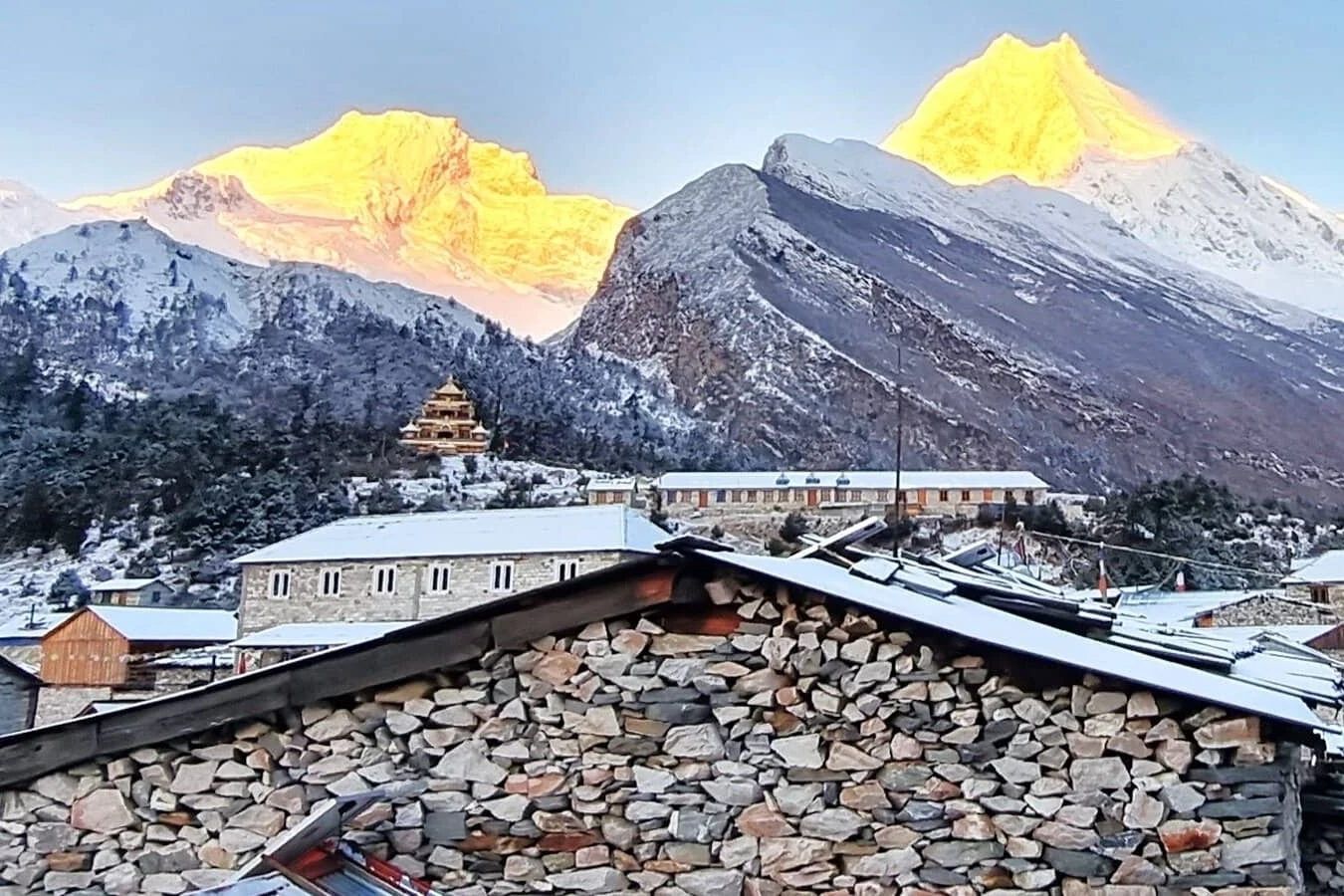
Trekking around the world’s eighth highest mountain peak Manaslu (8,163 m) via Manaslu Circuit Trek offers amazing experiences in Nepal. However, if you choose the correct season for your trek, the experience will be truly unforgettable. The best season for Manaslu Circuit Trek is Spring (March-May) and Autumn (September-November).
This guide aims at providing information on weather conditions, temperatures, trekking trail conditions, and other important factors that would come handy in planning your dream Manaslu Circuit Trek.
Manaslu Circuit Trek involves hiking through a remote part of Nepal lying in the Central Nepal where the altitude ranges from as low as 710 meters (Sotikhola) to 5,106 meters (Larkya La Pass). The weather in such areas differs according to seasons and altitude. If you trek in wrong season you might have to deal with problems like:
Choosing the right season ensures safer trekking, better accommodations, and crystal-clear mountain views.
The second-best time to do the trek is spring with a moderate climate, stable weather conditions, and beautiful scenery.
The start of spring is in March, where it's warmer than winter, with the temperature ranging from 4–12°C but with snow on Larkya La Pass. April is the best time, where the weather is beautiful, and temperatures range from 6-16°C without snow on the trails. In May, the weather remains warm with some humidity before rain comes.
Advantages:
Disadvantages:
Autumn is the best time for Manaslu Circuit Trek because it offers the most stable weather and sky conditions of the year.
| Aspect | Details |
| Temperature | Day: 10–20°C; Night: -5°C to 5°C depending on altitude |
| Sky Conditions | Crystal-clear with panoramic Himalayan views |
| Trail Conditions | Dry, stable, and in best condition |
| Highlights | Vibrant autumn foliage, major festivals (Dashain, Tihar), stable weather |
| Crowd Level | High (most popular season) |
The month of September witnesses the end of monsoons with rich green foliage and waterfalls. The best time to visit is October since it features ideal weather with clear skies and little rainfall. November is cool but comfortable with a reduction in the number of tourists at the latter part of the month.
Advantages:
Disadvantages:
The monsoon season transforms the landscape into lush green valleys but brings significant trekking challenges.
Monsoon trekking should only be considered if: You are an experienced trekker with flexible schedules and prefer privacy over comfort.
Winter offers clear skies and few crowds, but extreme cold and snow at high altitudes make it challenging.
| Aspect | Details |
| Temperature | Day: -5°C to 5°C; Night: -15°C to -25°C at Larkya La Pass |
| Sky Conditions | Clear skies with excellent visibility |
| Trail Conditions | Snow-covered; some teahouses closed at high elevations |
| Highlights | Pristine snowscapes, zero crowds, unique photography |
| Crowd Level | Low |
Challenges:
Winter trekking is not recommended for beginners but appeals to experienced trekkers seeking solitude.
| Month | Season | Day Temp (Lower Altitude) | Night Temp (Higher Altitude) | Trail Condition |
| March | Spring | 4–12°C | -6°C to -12°C | Dry, some snow at pass |
| April | Spring | 6–16°C | -2°C to -8°C | Perfect, dry |
| May | Spring | 10–20°C | 0–5°C | Warm, pre-monsoon humidity |
| June | Monsoon | 15–25°C | 5–10°C | Wet, slippery |
| July | Monsoon | 15–25°C | 5–10°C | Heavy rain, landslides |
| August | Monsoon | 15–25°C | 5–10°C | Wet, leeches common |
| September | Autumn | 15–20°C | 0–5°C | Improving, lush green |
| October | Autumn | 10–20°C | -5°C to 5°C | Best condition |
| November | Autumn | 5–15°C | -10°C to -5°C | Cold but clear |
| December | Winter | 0–10°C | -15°C to -20°C | Snow-covered |
| January | Winter | -5°C to 5°C | -20°C to -25°C | Extreme cold, pass may close |
| February | Winter | 0–10°C | -15°C to -20°C | Cold, improving late month |
| Season | Must-Have Gear |
| Spring/Autumn | Layered clothing, sun protection, sleeping bag (-10°C rating), hiking poles |
| Summer/Monsoon | Waterproof jacket/pants, gaiters, leech socks, rain cover for backpack, quick-dry clothes |
| Winter | Down jacket (-20°C), thermal layers, crampons, ice axe, insulated boots, balaclava |
| Priority | Best Season | Why |
| Best overall experience | Autumn (Oct) | Stable weather, clear views, dry trails |
| Flower blooms & warmth | Spring (April) | Rhododendrons, moderate temps |
| Solitude & low cost | Winter (Feb) | Few trekkers, clear skies |
| Budget travel | Monsoon | Lower prices, lush scenery (but challenging) |
| Cultural festivals | Autumn | Dashain & Tihar celebrations |
The Manaslu Circuit Trek is an unparalleled experience that will take you across remote villages, old monasteries, beautiful valleys, and the majestic Himalayan peaks. However, trekking during the appropriate time may enhance your experience in every possible way.
From ensuring your safety and comfort to providing the best mountain views and cultural encounters, choosing the correct season will give your adventure the edge that you need. Rhododendrons bloom during spring, whereas crystal clear skies await you during autumn.
Planning a Trek to Manaslu? Leave It to Experts
Do not compromise on your trip by trying to do things yourself. At Miracle Treks, we have the required expertise and experience to ensure you have a great time.
