
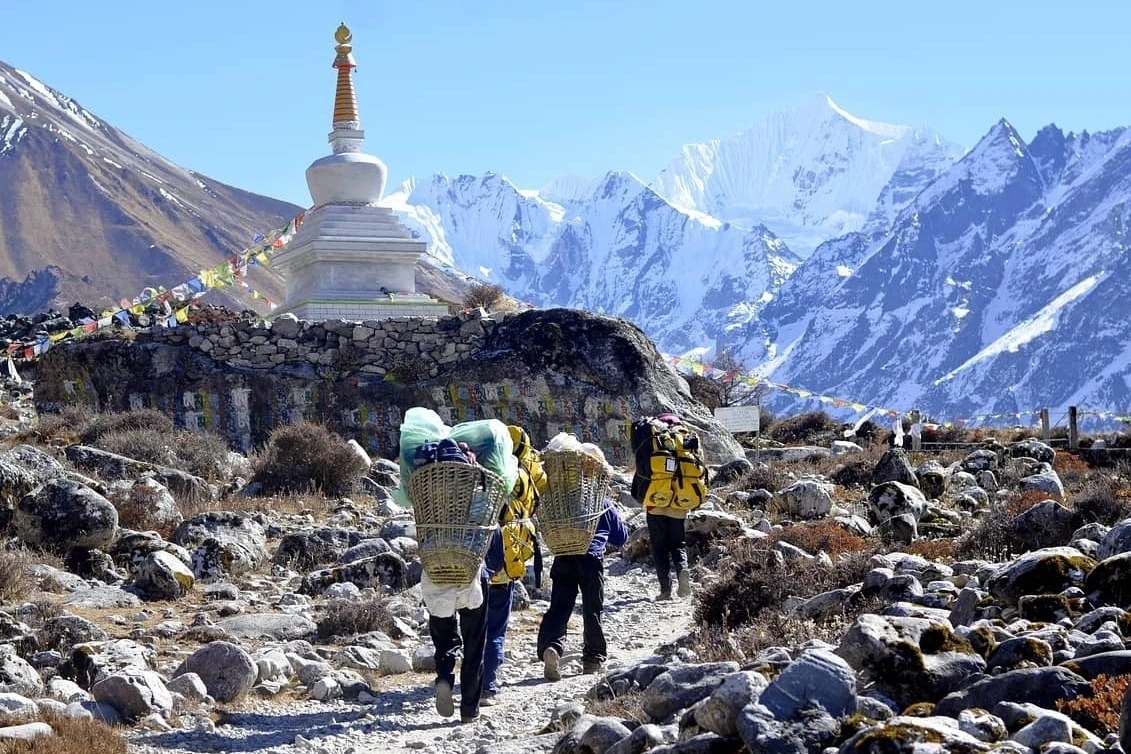
The Langtang Valley Trek is among the easiest of all Himalayan treks, but it certainly requires some respect and careful preparation in spite of that. This popular trekking route located in the Langtang-Gosaikunda area north of Kathmandu offers spectacular scenery, dense forests, Tibetan culture, and high mountain valleys without the high altitude of treks such as the Everest Route or the Annapurna Circuit. For someone who is ready and willing to train and get into good physical shape before embarking on this trip, the Langtang Valley Trek may be a great choice.
The Langtang Valley Trek is considered moderate in difficulty by most experienced guides, placing it below both the Everest Base Camp and the Annapurna Circuit routes. Usually, this trekking trail will take you between 7 and 9 days with around 60-80 kilometers covered in total. On a daily basis, you can expect to spend somewhere between 5 to 7 hours walking per day and your altitude will range from around 1,550 meters at Syabrubesi up to 3,870 meters at Kyanjin Gompa.
The main physical challenge comes from steady climbs, rocky and uneven trails, and the thinning air above 3,000 m, where breathing becomes harder and fatigue builds over repeated long days.
On most days, you'll be hiking for 5–7 hours on a combination of established tracks, stone stairs, forest trails, and ridges. The trekking route from Syabrubesi all the way through Lama Hotel and to Langtang village involves a steep and forested ascent. In contrast, the trek from Langtang village to Kyanjin Gompa entails a long and non-forested journey to view the Langtang Lirung mountain mass.
Due to that, new hikers will typically find themselves struggling through the forest part of the route and find the descent back tough on their knees and legs. All paths are well-traveled and easy-going, and therefore, you do not need glacial hiking experience nor ropes. However, balance and proper footwear are important.
Langtang takes you high into the mountains, and the air does contain less oxygen, but the altitude gain is more gradual compared to Everest region treks. You'll mostly spend your nights at 2,500 m up to 3,800 m. The highest point on the trek is 3,870 m Kyanjin Gompa, and you may visit 5,000 m Tserko Ri.
These usually include at least one acclimatization day (usually at Kyanjin Gompa), where you'll have a short detour and take it easy, allowing your body time to get used to the conditions. The risk of getting AMS is not ruled out here, so drinking lots of water, walking slowly, and being mindful of how you feel are vital.
Langtang is rather remote, and the climate can be unpredictable, particularly towards the top of the valley. Expect chilly mornings, evenings, and intense exposure to both sun and wind at higher altitudes.
Your night accommodations will likely be in basic teahouses with basic rooms, basic toilet facilities, and local meals. Though the standard of facilities is improving, you can expect minimal electricity, heating, and no luxury accommodation. For beginners, this will be challenging, but this is part of the adventure.
Absolutely! This trek is known as one of the best trekking options in the Himalayas for beginners, ideal for anyone trekking in Nepal for the very first time.
Nevertheless, "appropriate for beginners" does not mean that it will be easy. Beginners should be physically and mentally ready for the long days and challenging terrains.
You have to be fit enough to walk at least 4 to 6 hours in hilly areas and not require constant rest. During the 2 to 3 months before the trip, ensure you do:
If you tend to get cold easily, are nervous about altitude, or worry about being “too slow,” joining a small group or hiring a local guide can ease anxiety and keep you on track.
The standard Langtang Valley Trek itinerary goes approximately like this:
The most difficult parts in terms of physical exercise include:
Despite those difficulties, first-time trekkers manage to finish the trip successfully as long as they maintain a slow pace, drink water, and rest.
Beginner trekking trips should be kept relatively basic in terms of the amount of equipment required. Important components are as follows:
When uncertain about gear, trekking companies like Miracle Treks will assist in acquiring or renting these products in Kathmandu; this is particularly useful for first-time trekkers.
Beginners should be aware of common altitude illnesses such as headaches, nausea, dizzy spells, exhaustion, and lack of breathing while resting. When these symptoms persist or worsen, descent a few hundred meters to avoid problems, and report to the guide or the owner of the accommodation.
The remoteness of Langtang requires you to take this seriously.
While Langtang is perfect for the physically fit, healthy beginner, it isn’t suitable for everyone. It will be too difficult if:
In such scenarios, you should try a less rigorous trek at a lower altitude (e.g., Shivapuri-Nagarjun and Panchkhal loops).
The Langtang Valley Trek is the perfect choice for the enthusiastic beginner who has good physical health and is adventurous enough to appreciate the Nepal Himalayas' beauty.
If you're thinking about taking the Langtang Valley Trek and need a beginner-friendly, organized trip led by professional guides with comprehensive support throughout the experience, Miracle Treks is the company to speak to. They create personalized Langtang Valley trekking experiences for complete novices.
